
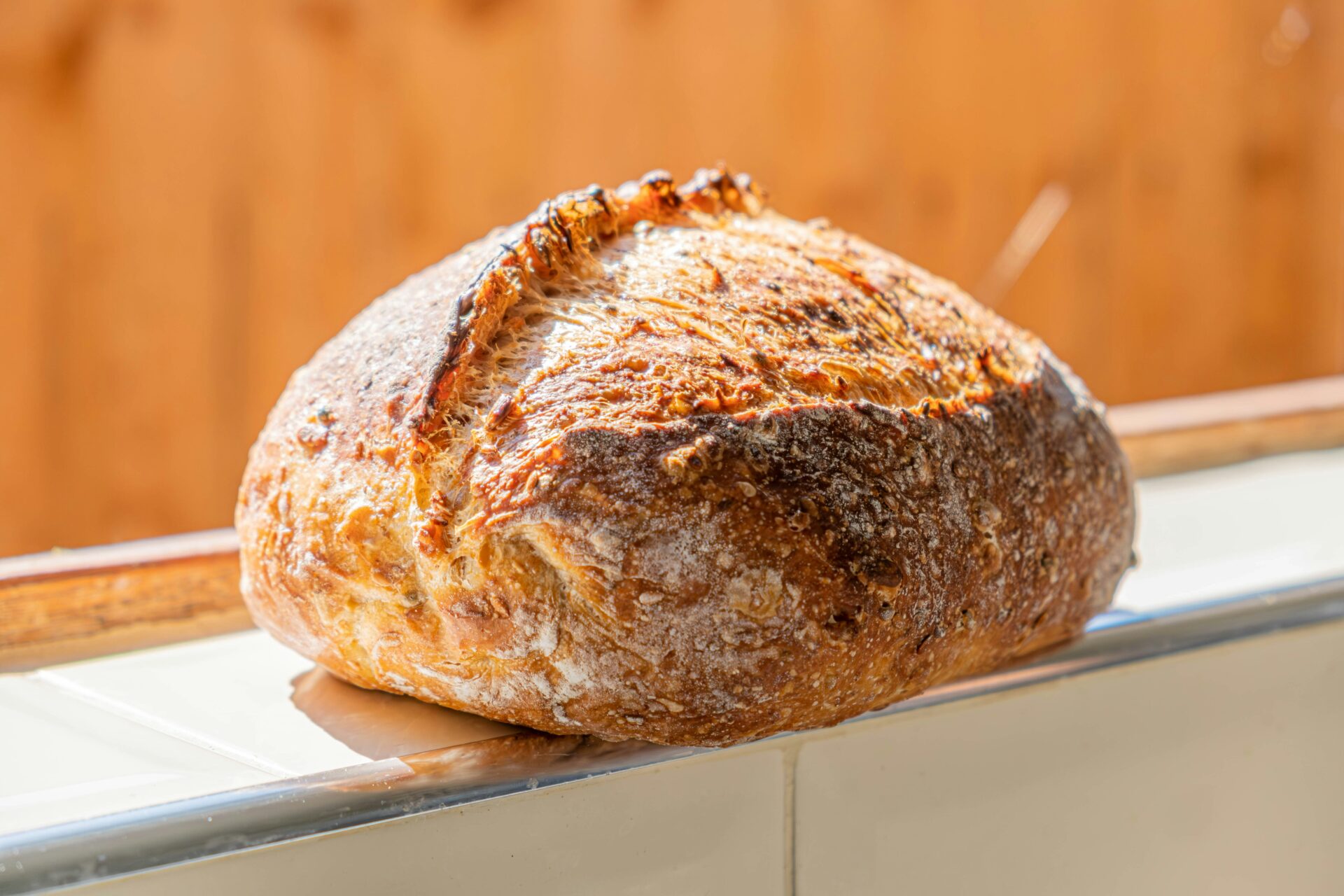
Sourdough has become synonymous with health but does the science support this?
The answer is “it depends” because how the bread is made matters, as well as the ingredients it contains. If the bread is ‘real sourdough’, made with a starter culture and fermented for 12-24 hours, then the bacteria will produce acids. They modify the starch contained, so it digests more slowly. This means that post-meal blood glucose levels don’t spike as high, keeping insulin levels lower too (Liljeberg, 1997). Both are desirable from a health perspective.
Ozer and colleagues (2023) tested 43 women with gestational diabetes and 38 healthy pregnant women. They gave both groups the same breakfast, the same carb dose, but different types of bread either white wheat bread or whole grain sourdough. The white wheat caused 45% more insulin and 9.6 % more first-hour glucose, than the sourdough. The only variable was the bread.
So from a nutrition perspective there is a benefit to your glucose levels with real fermented sourdough.
The term "sourdough" however is not legally defined or protected in the UK by law. Manufacturers can therefore replicate the flavour through adding acid e.g. vinegar. If bread is traditionally fermented then the label will list flour, water, salt, and starter. That’s all. So you need to check the labels or ask the bakery if sold fresh.
Practically speaking though I rarely recommend it to clients. Most sourdough is made with white wheat. In addition, unless it’s organic, wheat is generally sprayed with glyphosate which is considered toxic to the nervous system and linked to many health issues. Wholegrain, organic, traditional sourdough is not readily available in supermarkets, so availability and cost can also be an issue.
One last point. The glucose response is very individual. I am OK with bread, but not rice. Even so I try to stick to stick to home-made carbs. I especially like my chickpea soda bread because It’s quick and easy to make and full of fibre and protein. You can find the recipe here. https://helenmaxwellnutrition.co.uk/healthy-recipe/chickpea-soda-bread-gluten-free/
Ostman, E.M. et al. (2001). Inconsistency between glycaemic and insulinemic responses to regular and fermented milk products. Am J Clin Nutr;74:96–100. https://pubmed.ncbi.nlm.nih.gov/11451723/
Ozer, Y.E et al, (2023) Glycaemic responses to whole grain sourdough bread versus refined white bread in patients with gestational diabetes; Wien Klin Wochenscher; 135 pp. 345-347. https://pubmed.ncbi.nlm.nih.gov/37106088/


